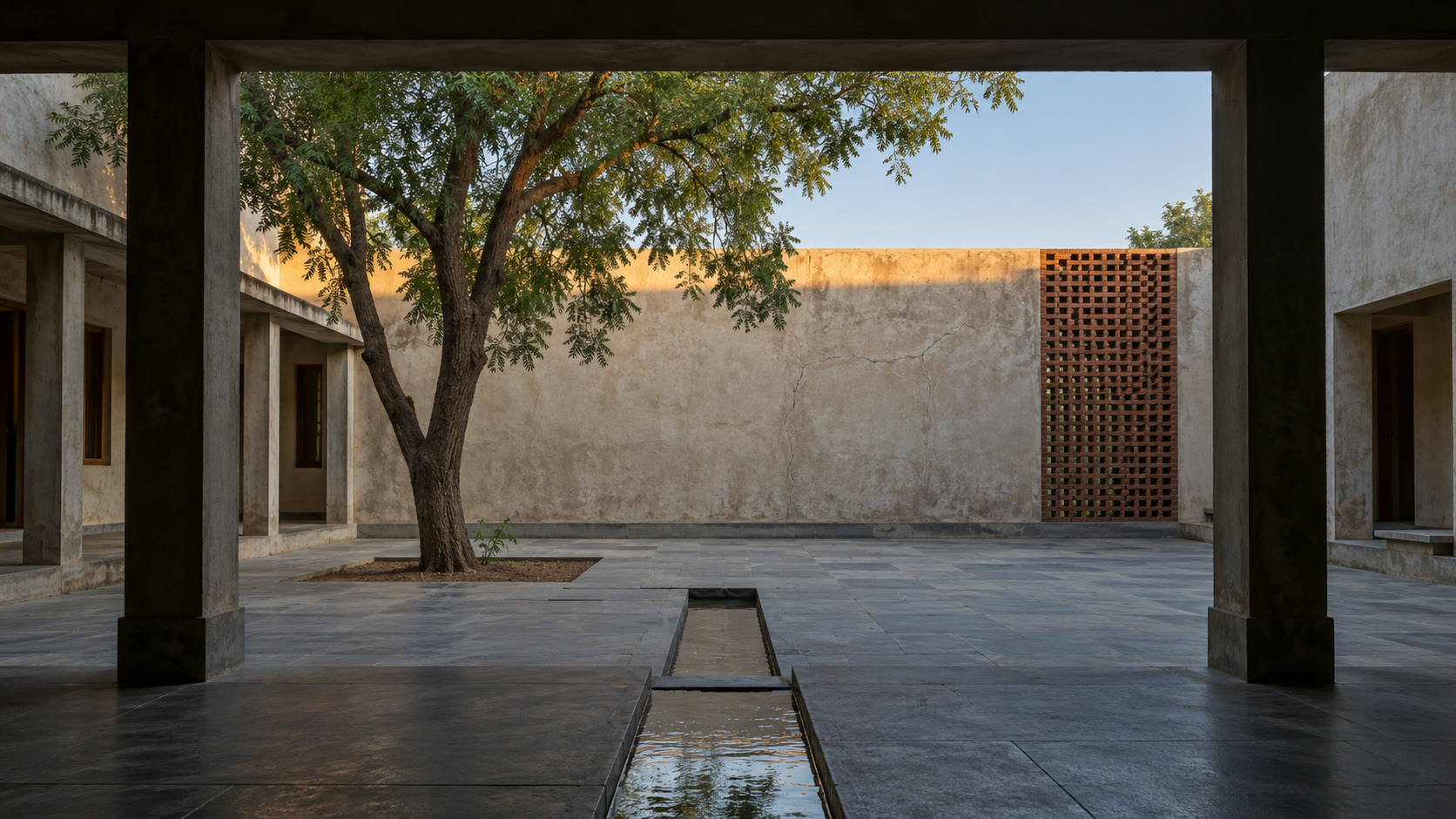
Twelve courtyard houses in Shela, Ahmedabad, planned around the path of the sun.
Scroll to move the day forward, or skip ahead
First light reaches the top of the far wall.
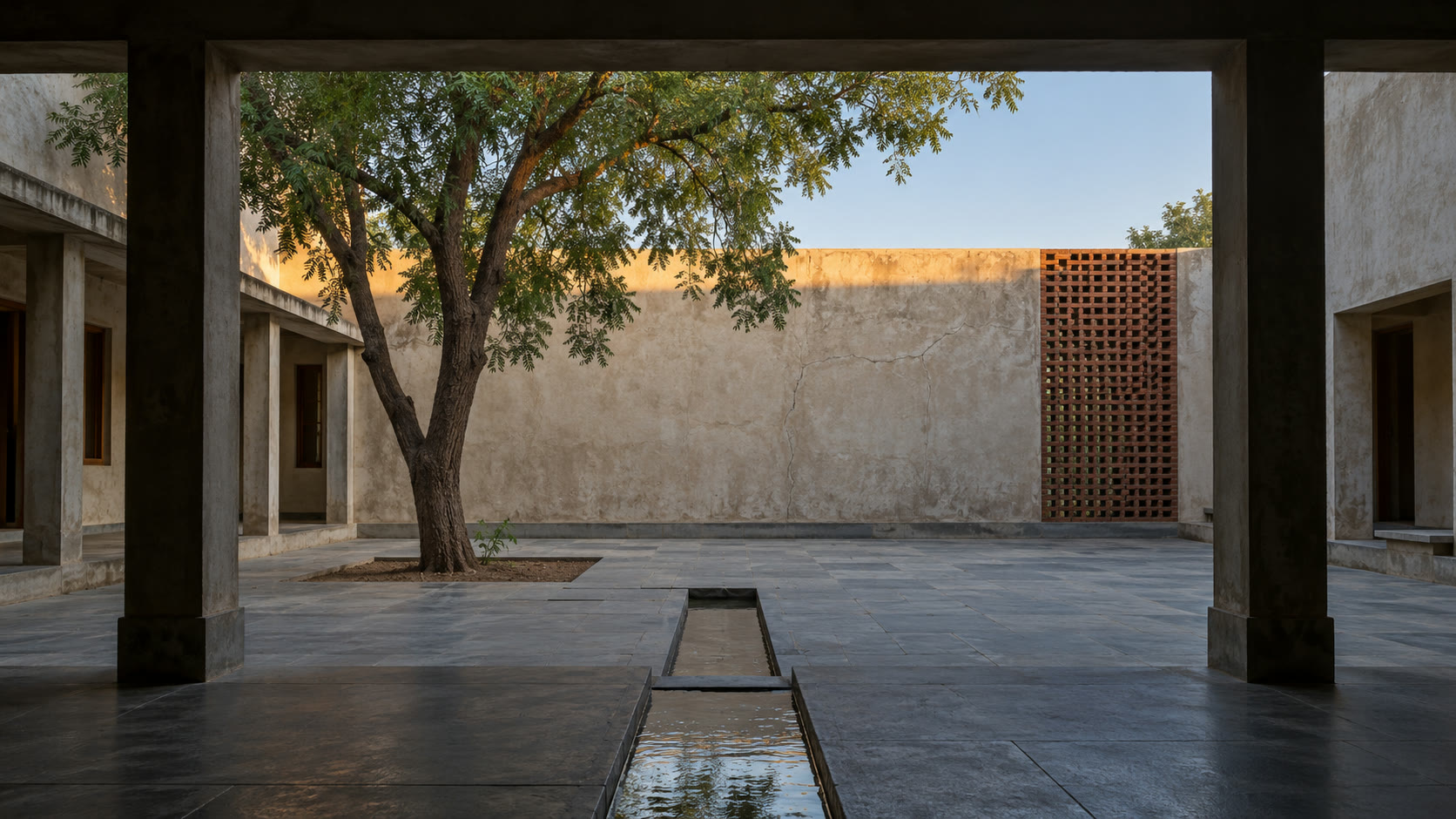
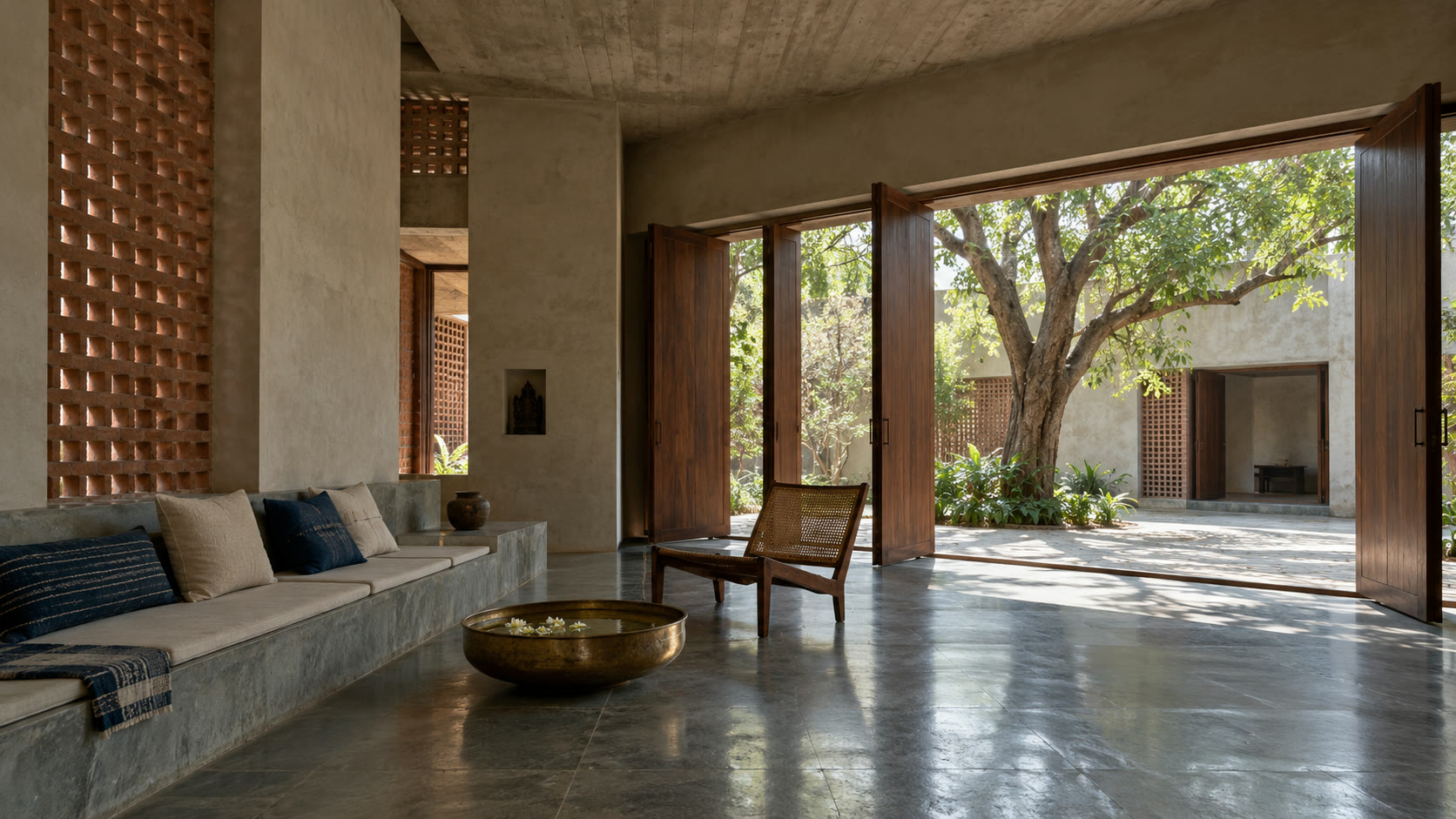
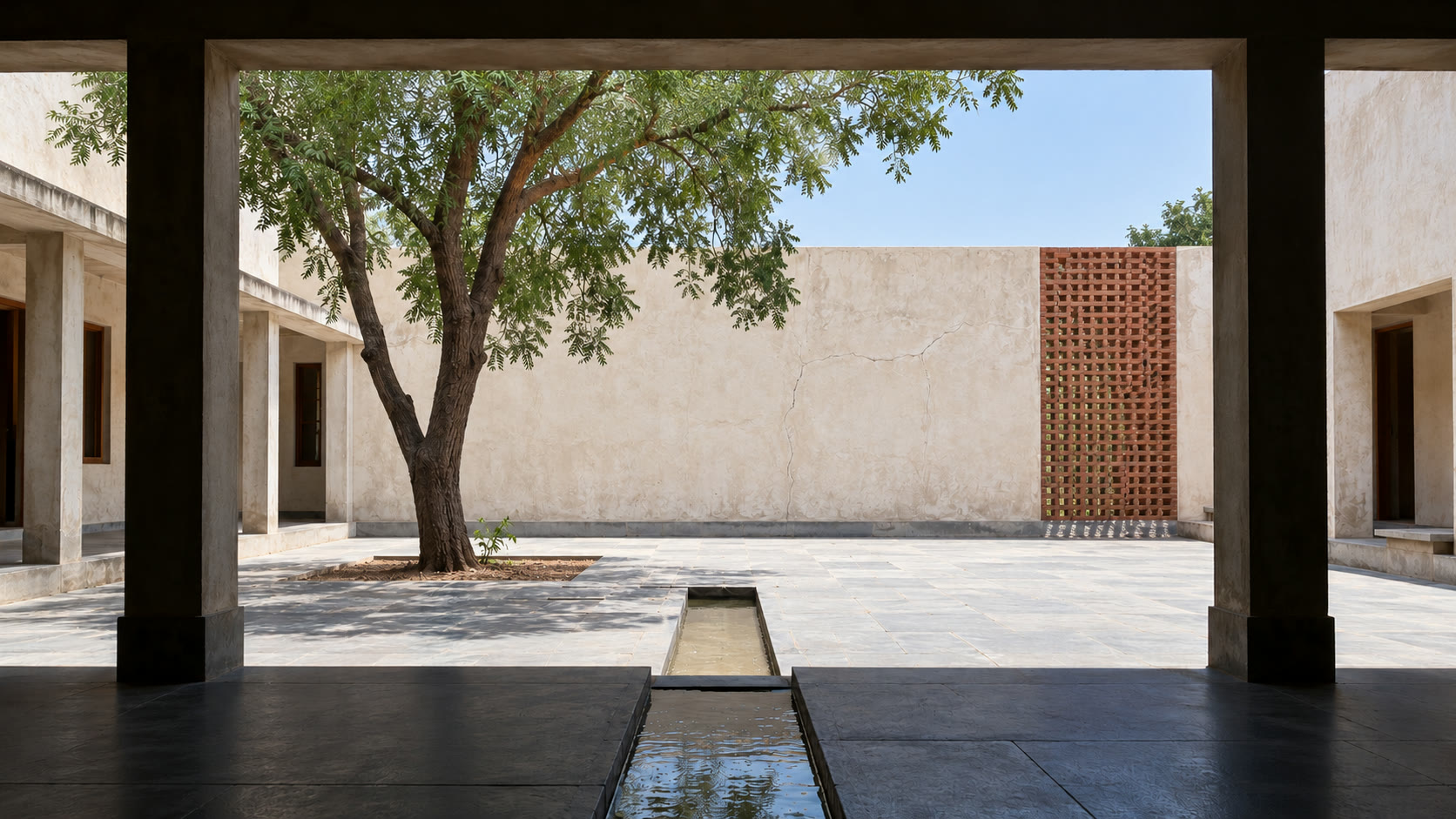
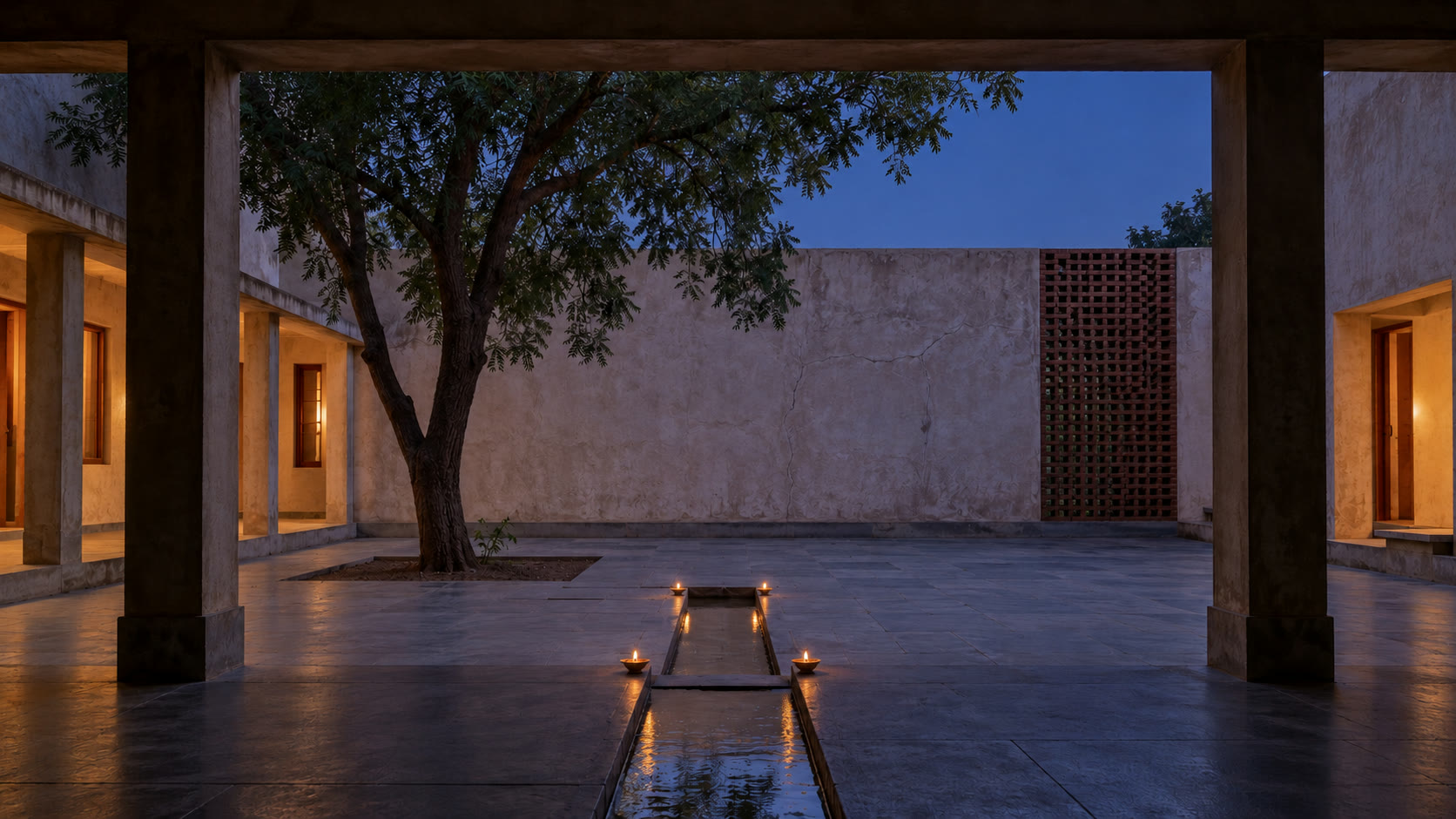
Ujas is twelve houses on a 2.1 acre plot. Every house is built around one open court with a neem or peepal tree, a stone water channel and a brick jaali on its west wall. Rooms face the court, not the street.
- Houses
- 12, in four types
- Built area
- 380 to 520 m²
- From
- ₹6.8 Cr
- Possession
- March 2028
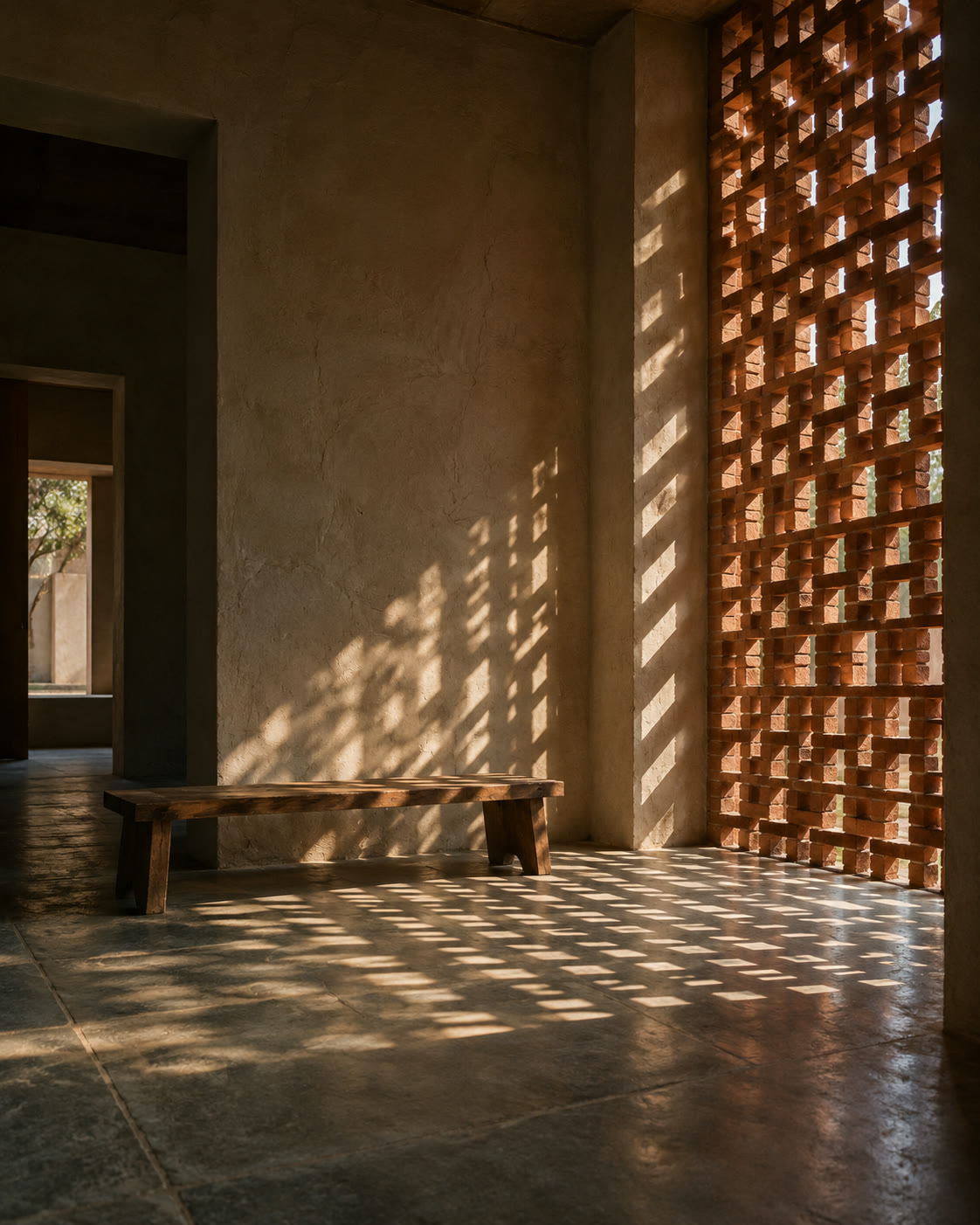
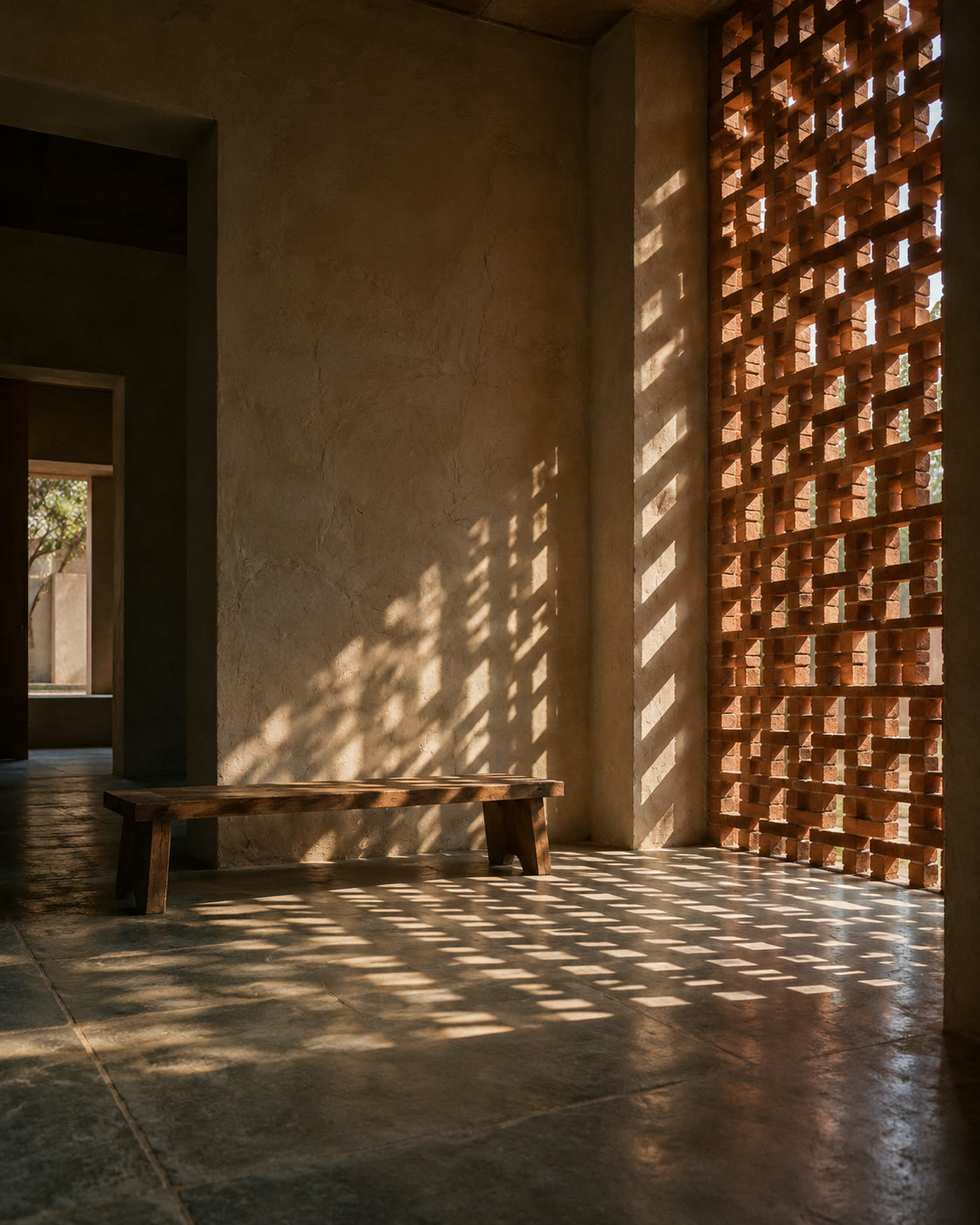
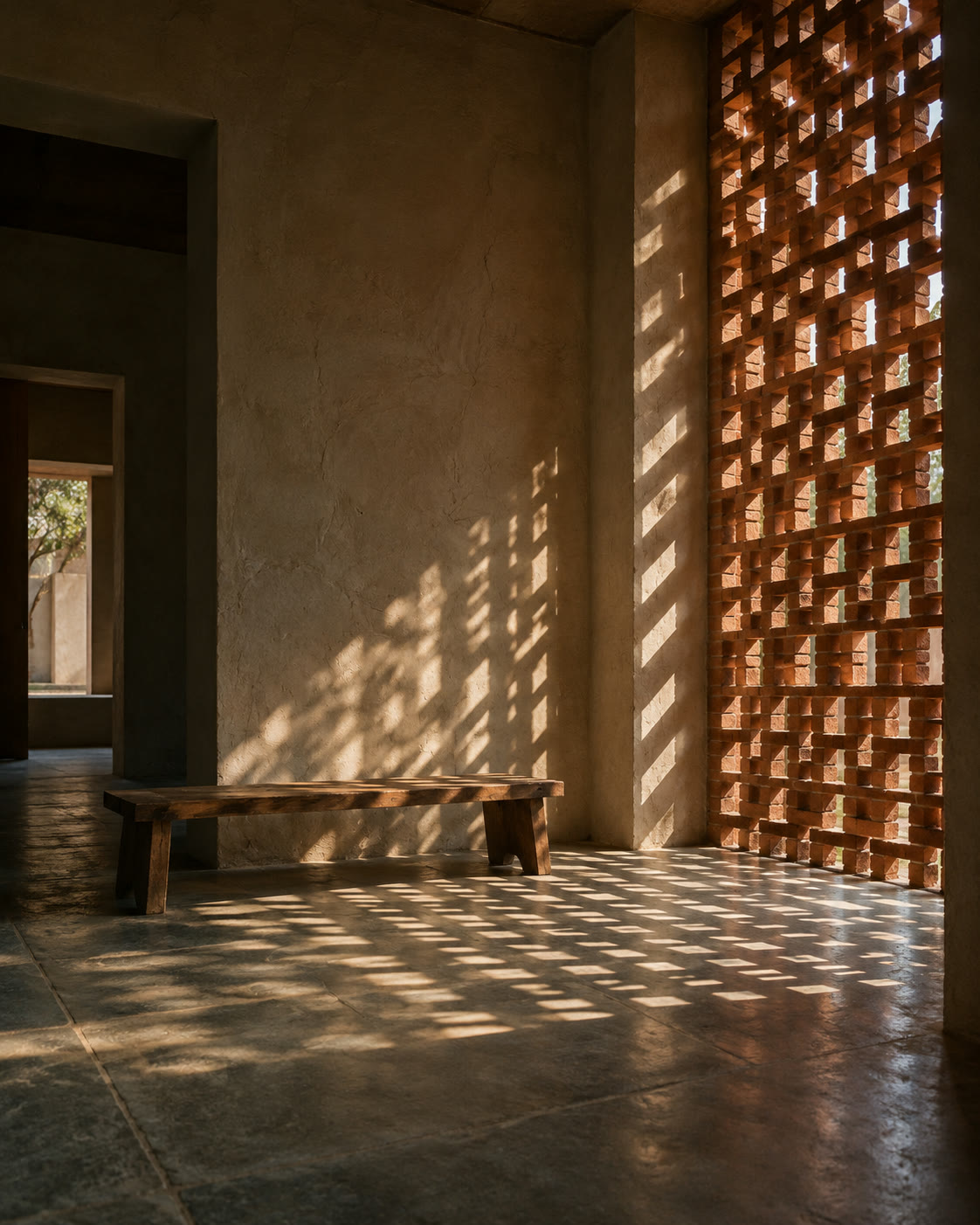
The west wall of every court carries a brick jaali, 2.4 m tall.
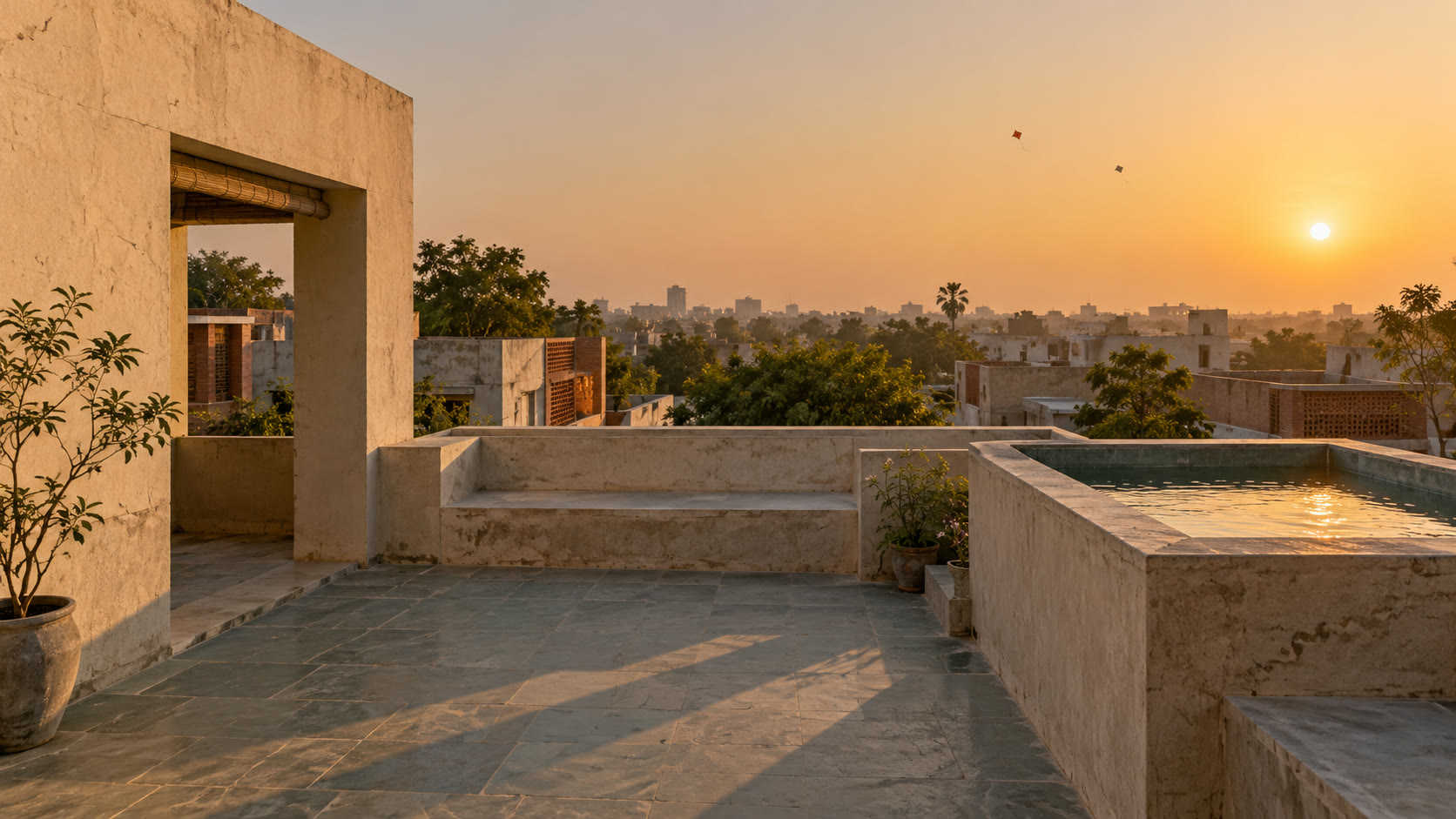
From about three in the afternoon it stops the direct sun and lets through a pattern instead. This wall is lit by the real sun for the site on 21 March. Keep scrolling and it moves on to sunset.
Sun study
The whole site as a white model, lit by the sun as it will be in Shela on that day. Pick a date and drag the time. Click a house to see it on its own. The shade figures are measured on the model, not written in.
8 of 12 houses available. Reserved houses are the darker ones. Click any house on the model.
Four house types
July
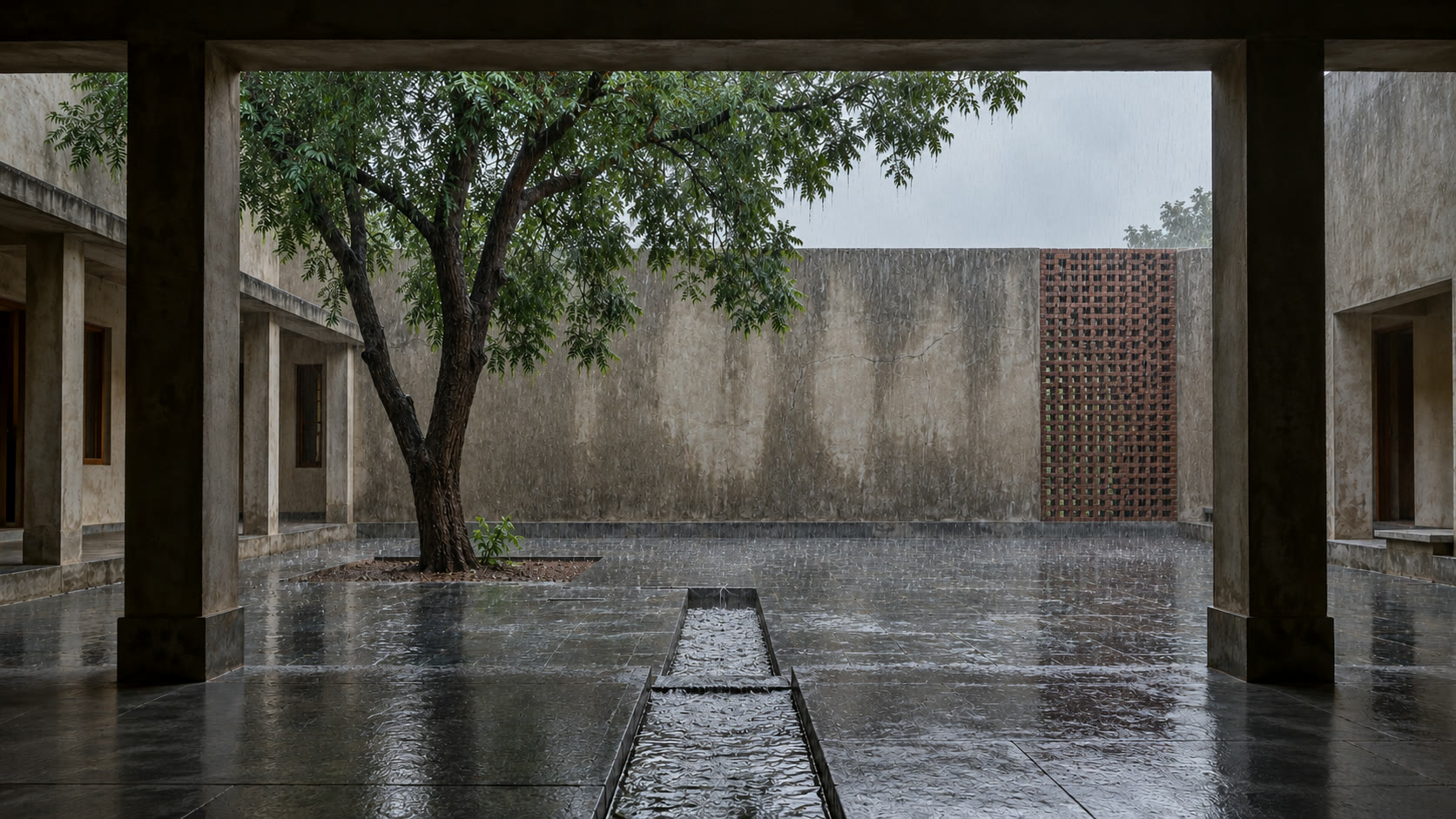
The court floor falls 1 in 80 toward the channel. Rain runs along it into an underground tank under the verandah that holds 60,000 litres, enough to water the tree and the garden through to March.
Six materials, and where they come from
- Kota stoneFloors and the water channel. Quarried at Ramganj Mandi, Rajasthan, honed, never polished.
- Handmade brickWalls and jaalis, fired near Sanand, 40 km west of the site.
- Lime plasterThree coats, hand trowelled, left to crack a little.
- TeakDoors and shutters, reclaimed from old houses in the walled city.
- BrassHandles and hinges, cast in Moradabad, unlacquered so they darken.
- TerracottaRoof tiles laid over the slab to keep the rooms below cool.
Shela, on the western edge of Ahmedabad
The plot sits just outside the ring road, between farmland and the city's newest roads. Close enough to drive into the city for dinner, far enough out that the plot still has its old neem trees.
- Sardar Patel Ring Road
- 4 min
- SG Highway at Prahlad Nagar
- 18 min
- IIM Ahmedabad
- 32 min
- Airport
- 45 min
- Manek Chowk, old city
- 50 min
Drive times are estimates from the gate on a weekday at 10:00.
Walk the site
Site walks run on Saturdays at 07:00 and 17:30, when the courts are at their best. They take about an hour and start at the gate.